
Tirth Darshan
Dhupkheda — Shri Sai Baba Prakat Bhoomi
A place of pilgrimage for every Sai devotee — where the story of Shirdi’s Sai Baba begins.
Why Dhupkheda
The land of Baba’s first devotee
Dhupkheda (also called Dhupgaon) lies near Dinapur Road in the Paithan taluka of Chhatrapati Sambhajinagar district. Devotees honour it as Shri Sai Baba Prakat Bhoomi — the land where Sai Baba was seen before he came to Shirdi, and the village of Chand Patil, remembered as one of Baba’s first devotees.
Devotees believe Baba spent nearly nine years of his early life in this region. It was from Dhupkheda, with Chand Patil’s family, that Baba first travelled to Shirdi — the town that would become his home for the rest of his life.
Today the Shri Saibaba Seva Sadhanashram, founded by Swami Baldev Bharti Ji in January 2000, keeps this memory alive with the world’s first Shri Sai Ganesh Mandir, daily aarti, Annadan and the annual Sai Rudra Mahotsav.
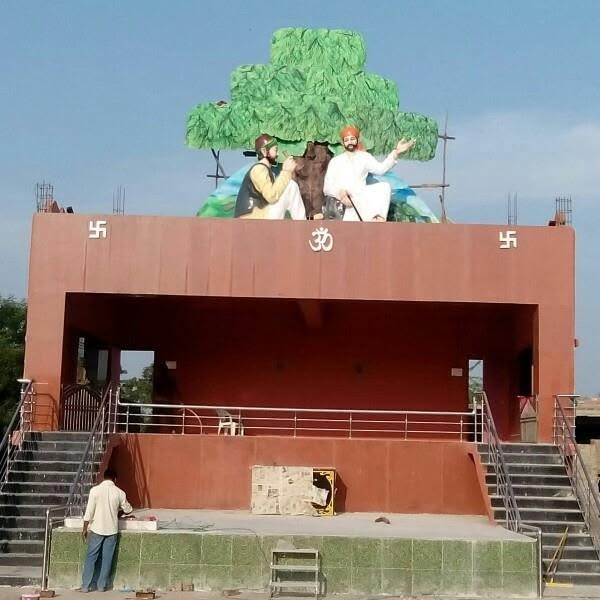

Shri Sai Satcharitra, Chapter 5
Chand Patil and the lost mare
Chand Patil, a well-to-do man of Dhupkheda, had lost his mare and searched for her for two months without success. Returning home disappointed, he met a young fakir resting in the shade of a tree, wearing a kafni and carrying a satka (short stick).
The fakir invited him to share a chillim. To light it, he thrust his tongs into the ground and drew out a live coal; he struck the ground with his satka and water flowed to wet the cloth. Then he told Chand Patil to look in the nearby nala — and there was the lost mare.
Amazed, Chand Patil brought the fakir to his home in Dhupkheda. Some time later, when a wedding party from Chand Patil’s family set out for Shirdi, the fakir went with them. At the Khandoba temple in Shirdi, the priest Mhalsapati welcomed him with the words “Ya Sai!” — “Welcome, Sai!” — and from that day the world has known him as Sai Baba.
Nimba Vriksha
The neem tree in the life of Sai Baba
The neem tree holds a special place in Sai Baba’s story. According to Shri Sai Satcharitra, when Baba was first seen in Shirdi he was a lad of about sixteen, sitting in deep meditation under a neem tree — unmoved by heat or cold, speaking to no one.
Baba later said the spot beneath that neem tree was the place of his Guru. Devotees call it Gurusthan, and it remains one of the most sacred places in Shirdi. It is said that the leaves of this neem, though naturally bitter, tasted sweet to those who ate them there — a sign of Baba’s grace.
At Dhupkheda too, an ancient tree within the ashram is revered by devotees, with a small shrine at its foot where pilgrims pause in prayer — a reminder of the simple life Baba lived beneath the trees before he ever came to Shirdi.
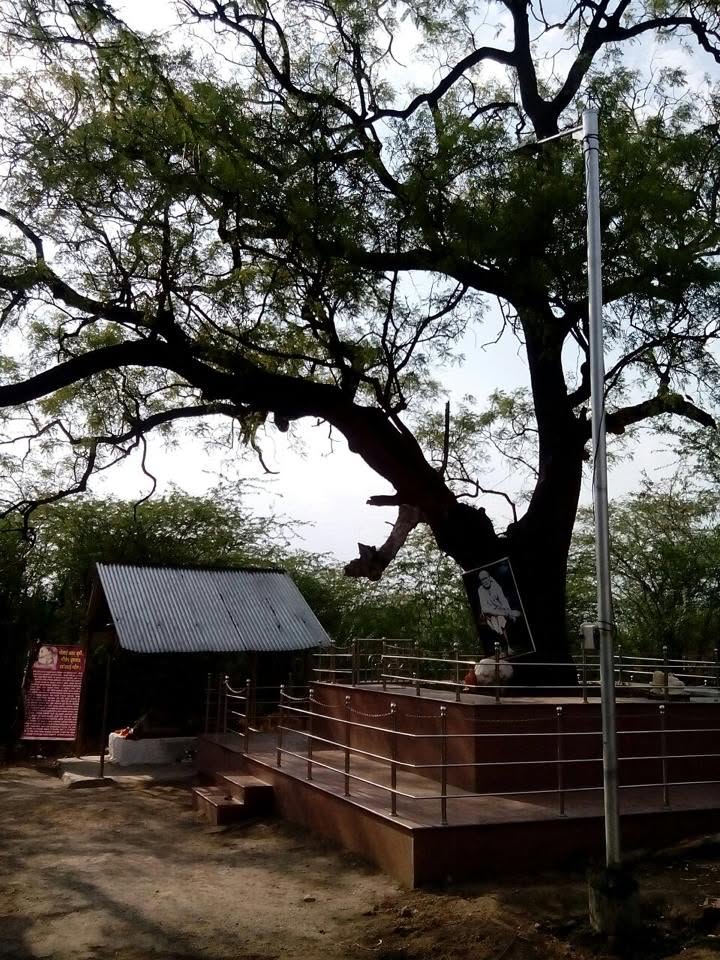
At the ashram
Places to see
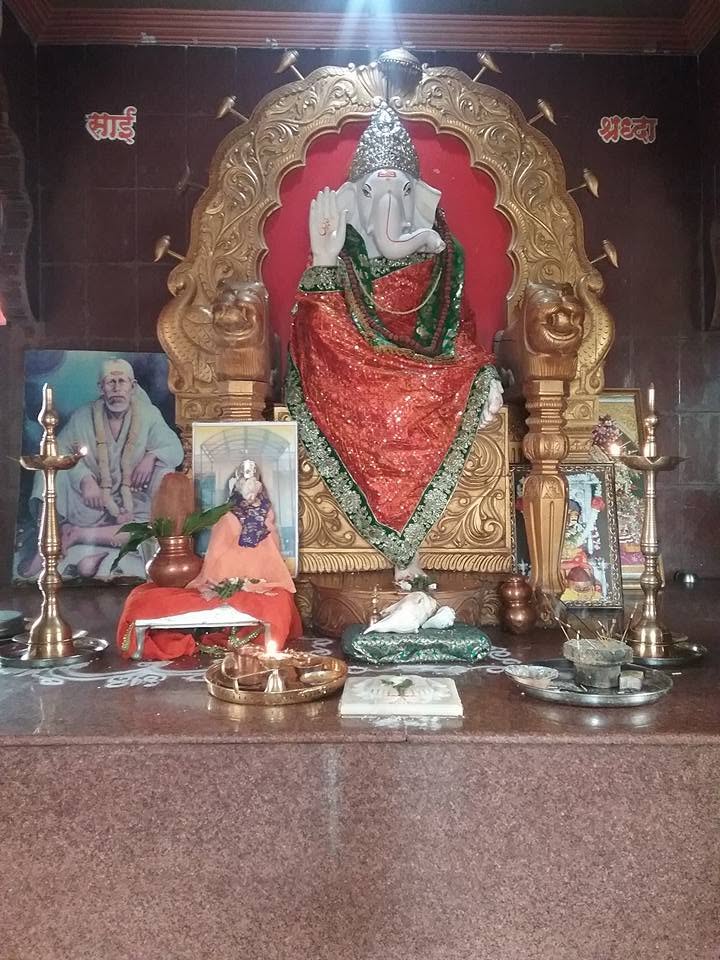
Shri Sai Ganesh Mandir
The world’s first temple where Sai Baba and Shri Ganesh are worshipped together.
Sai–Chand Patil tableau
The 22-foot memorial of Baba’s first meeting with Chand Patil.
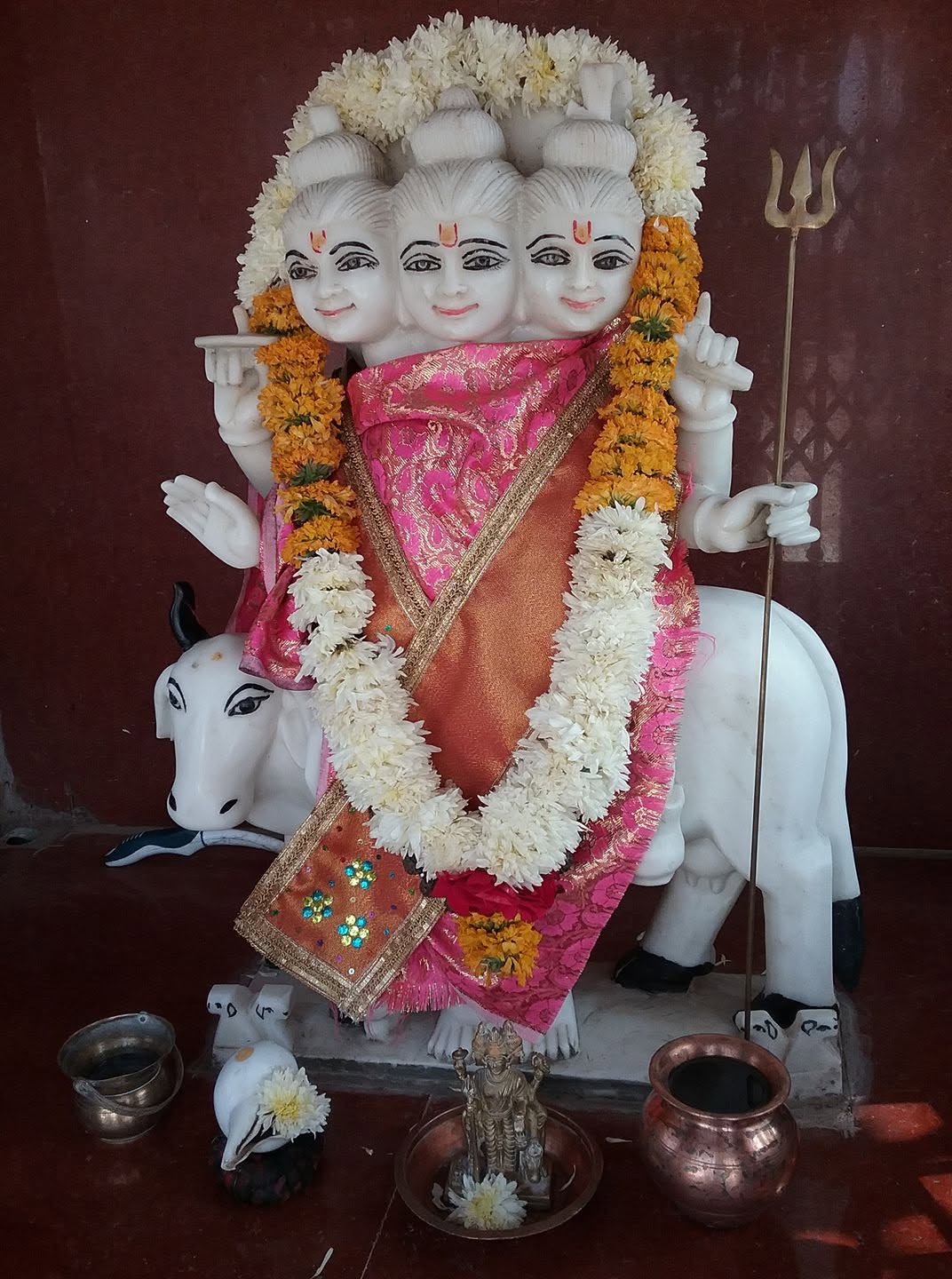
Shri Dattatreya murti
Shri Guru Dattatreya, the three-faced Adi Guru, adorned and worshipped at the ashram.
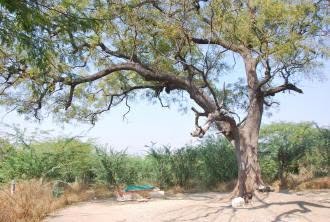
The sacred tree
An ancient tree with a shrine at its foot — a quiet place for prayer.
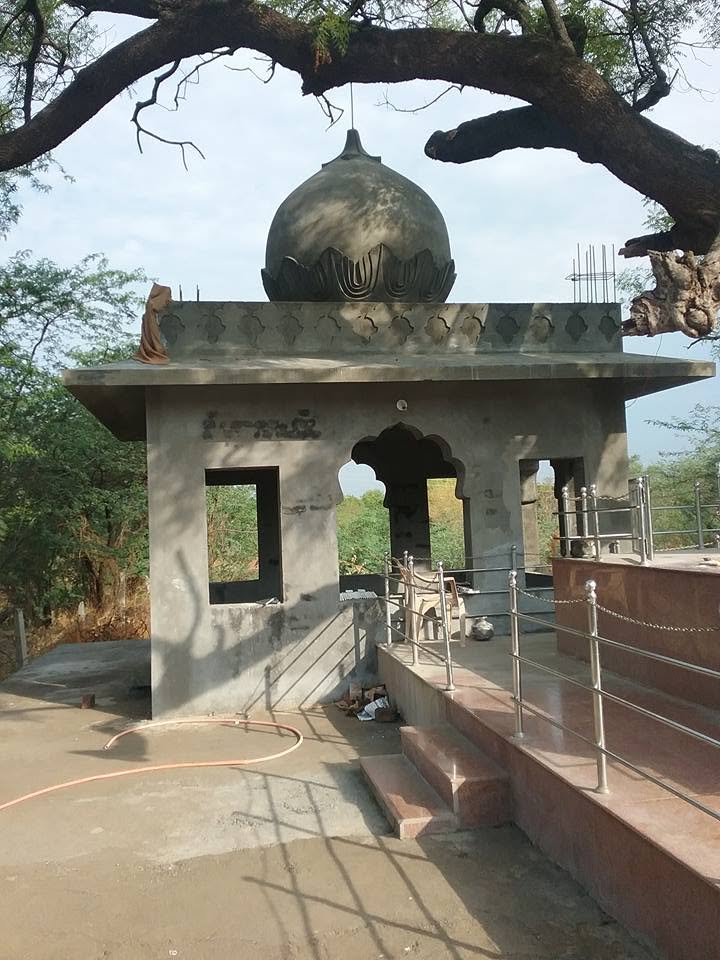
Chhatri & pavitra sthan
Sacred memorials within the ashram grounds.
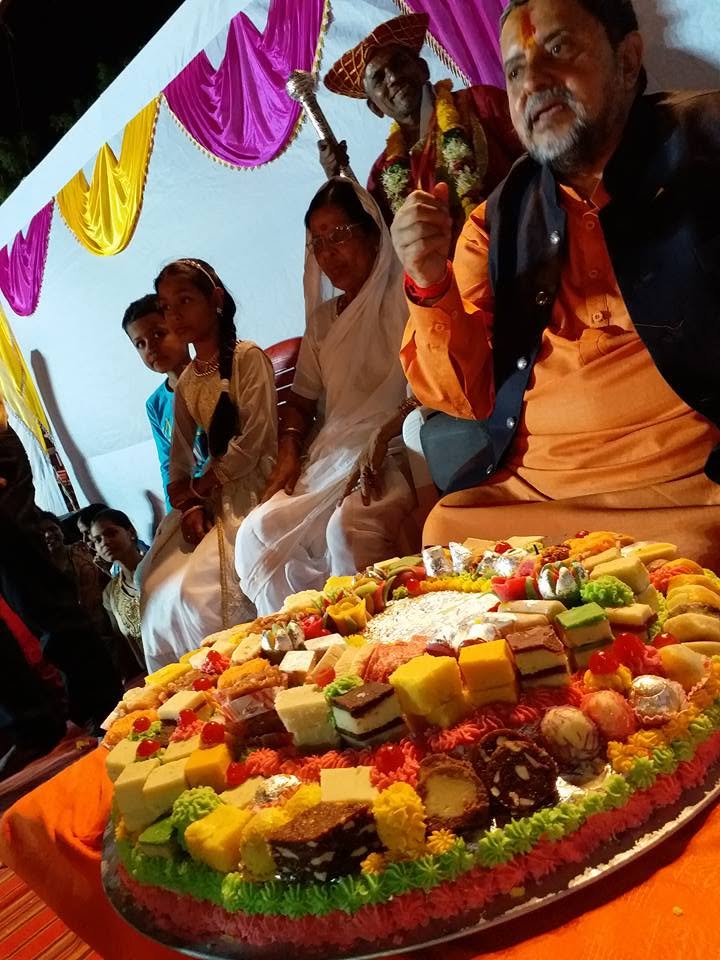
Mandir & Annadan
Daily aarti and free prasad for every visitor.
Paryatan
Make it a complete yatra
Dhupkheda sits in one of Maharashtra’s richest pilgrimage and heritage regions.
Paithan
The holy town of Sant Eknath Maharaj on the Godavari — the Nath Mandir and samadhi, Dnyaneshwar Udyan at Jayakwadi, and the famous Paithani silk weavers.
Shirdi
Continue Baba’s journey to Shirdi — Samadhi Mandir, Dwarkamai, Chavadi and the Gurusthan neem. About three hours by road from the Sambhajinagar region.
Chhatrapati Sambhajinagar
Gateway to the UNESCO World Heritage caves of Ellora and Ajanta, the Grishneshwar Jyotirlinga, Daulatabad fort and Bibi ka Maqbara.
Plan your darshan
Directions, travel tips and the ashram’s contact numbers — and book your presence for the next utsav.